
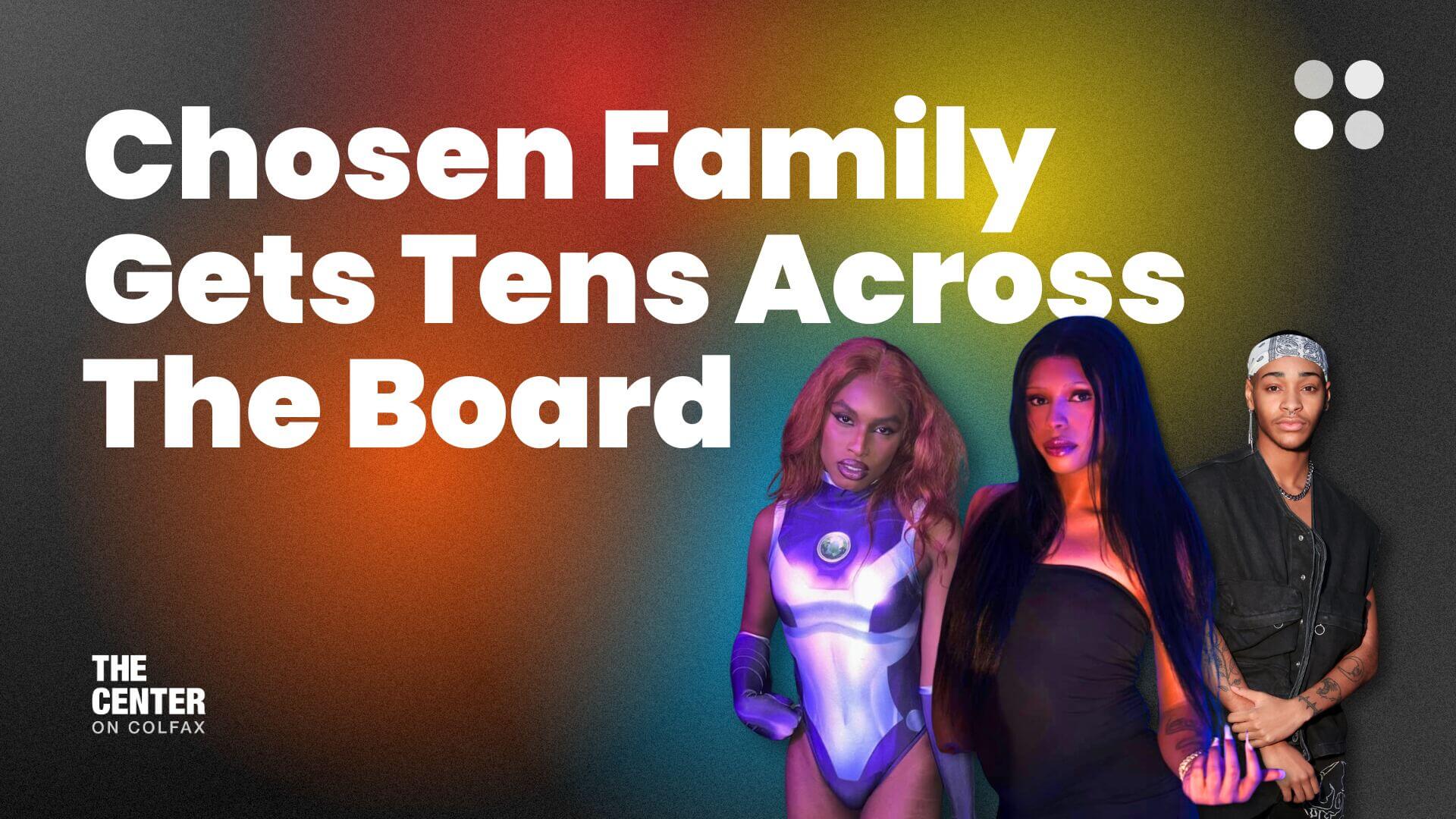
Celeste Jackson didn’t grow up imagining herself under bright lights, chin lifted, judges watching, crowd roaring.
For most of her life, she was “just going through the motions.”
Then she walked her first ball.
At the Mother Earth Is Burning Kiki Ball at History Colorado last year — a climate justice–themed night of categories, commentary, and couture — Jackson strutted onto the runway and into herself.
“I felt like I had stepped into a new part of myself that felt so beautiful and confident,” she said. “Like I finally got to see me.”

As a Black, transgender woman, Jackson had spent years feeling unseen and marginalized.
being Black and being Queer are celebrated
“But in ballroom,” she said, smiling, “being Black and being Queer are celebrated.”
Now a performer in the Kiki House of Swarovski, Jackson has found more than stage presence. She’s found home.
“My house members are my everything,” she said. “They are the village that carries me through my greatest accomplishments and my darkest days.”
Denver is More Than Just Hiking Boots
Ballroom culture was born in 1960s New York City, created by Black and Latinx queer and trans communities who built their own stages when the world refused to give them one. Documentaries like Paris is Burning and shows like Legendary popularized the art form in the 1980s and 1990s – as the AIDS epidemic ravaged through the LGBTQ+ community and performing became a creative outlet as much as a form of resistance.
And in Denver, Mother Venus Swarovski has watched the scene grow. Venus, a Black, transgender woman, has performed and mentored others for four years.
“We went from drag and ballroom only being for gay bars to being welcomed into mainstream spaces,” Venus said. “And straight, cis people are now watching and cheering on queer art.”
And for Venus, ballroom is much more than a performance on a runway.
“Ballroom is a community. It’s an event. It’s people. It’s like a pageant with different categories — people come by, they walk, they battle, they get their 10s,” Venus said.
Each month at The Pearl, Venus throws OTAs — Open To Alls — inviting anyone brave enough to step into the ballroom spotlight. She’s seen people of all races and genders step up to the plate.
“I think it’s great when anyone is willing to get up in front of a group of people and express themselves through art,” she said. “And ballroom isn’t just for Black and Brown queer people anymore. We started it, but it is truly open to all.”
At a ball, performers start in the back of the room and work their way toward the judges’ table at the front — each step sharper, prouder, louder than the last.
“It’s like sports for gay people,” Venus laughed. “That’s how I think about it.”
But it’s also a sanctuary.
“It’s nice to have a place to go to when shit is hard outside in the world,” she said. “There’s a space where you get to celebrate yourself and not be judged. We’re being received. It feels good.”
In a city known more for hiking boots and athleisure than high-fashion fantasy, ballroom becomes the runway, and the revolution.
“We are gorgeous and we get to be received by an audience that sees that,” Venus said. “You don’t always get that as a Black, Queer person in Denver.”
And she’s watched it grow.
“It used to be so small,” she said. “Seeing it grow means we’re obviously doing something right. It’s very heartwarming.”
Pride, Protest, and Sisterhood
For Venus, pride is inseparable from resilience.
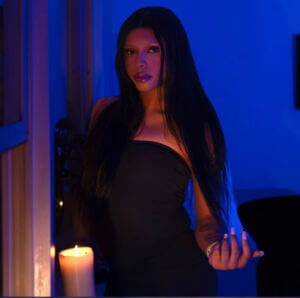
“I’m definitely proud to be Black and Queer because it means to be resilient,” she said. “There are so many hardships that Black, Queer people face. It’s hard AF. And then I keep putting my best foot forward.”
She pauses.
“As African Americans, the injustices have been going on for so long. Then you add being queer on top of that — it’s a double whammy. But it’s definitely something to be proud of.”
Ballroom itself is rooted in that legacy.
"Everywhere you look, you see Black Queerness in ballroom."
“Ballroom came from Black Queer people,” Venus said. “Everywhere you look, you see that Black Queerness in ballroom.”
Beyond the runway, she mentors a full house of Black trans women — her children — guiding them in both craft and life.
“I try to help them in their actual lives,” she said. “We talk about makeup, transitions, dating, jobs — just being girls together. Chosen family can feel much closer than biological family.”
And when biological families have turned their backs, that chosen family becomes everything.
Black Queer Joy, On Purpose

If ballroom is sanctuary for Venus, it’s therapy for Indie Renaissance.
Indie (he/they), 25, has been performing for nearly 20 years. He started ballet at 4 years old with his older siblings.
“I found my purpose,” he said.
Indie performed as a ballet dancer for the next two decades. In 2022, while watching Legendary, he was inspired watching Black, Queer performers vogue and felt called to pivot from ballet to the club scene.
“Nightlife is a new space for a lot of trans men, specifically, since we haven’t always been welcomed there,” he said. “And obviously clubs are different from ballet, but it felt pretty natural to me since I’ve always been a performer.”
Ballroom has also been an avenue for Indie to celebrate supporting other Black, trans dancers. Showing up for himself has also helped him show up for community.
“As a Black, trans person, you don’t always get open arms and love on a regular day-to-day basis,” Indie said. “So being in those kinds of scenarios — where you can see the love and the passion in one room — is very liberating.”
Movement is medicine.
“Performing to me is therapeutic,” he said. “There are so many ways we talk about where you hold tension in your body. Being able to move your body like that? It releases so much.”
But what moves him most is watching the next generation.
“I love seeing kids walk,” Indie said. “It’s kind of tear-jerking for me because I wish I could’ve had that as a child. It’s so heartwarming to see we’ve opened up spaces for queer people to have fun and express themselves.”
For Indie, Black queer joy feels like a giant party.
“Your family — chosen or not — that looks like everyone getting together, cooking for each other, drinking alongside one another, laughing, playing games, without the trauma behind it,” he said. “That’s the passion we have. It’s important not just to have Black joy, but to witness it and experience it.”
He grows serious when asked what allies can do.
“See something, say something,” he said. “We have been on the front lines since we got here. Right now, with the political climate, Black people are no longer wanting to put their bodies on the line to make a movement.”
Online activism is important, he believes, but showing up to physical protests and movements is also vital for allies.
“It’s very important for non-Black and non-queer people to physically show up where Black people cannot or do not feel safe to. I would like to see more people physically show up to spaces.”
On any given ballroom night in Denver, the lights come up. The music hits. The commentator calls the category. Someone starts in the back of the room.
They walk.
They pose.
They claim the space.
And somewhere between the first 10 and winning the crown, what was once survival becomes shine.