
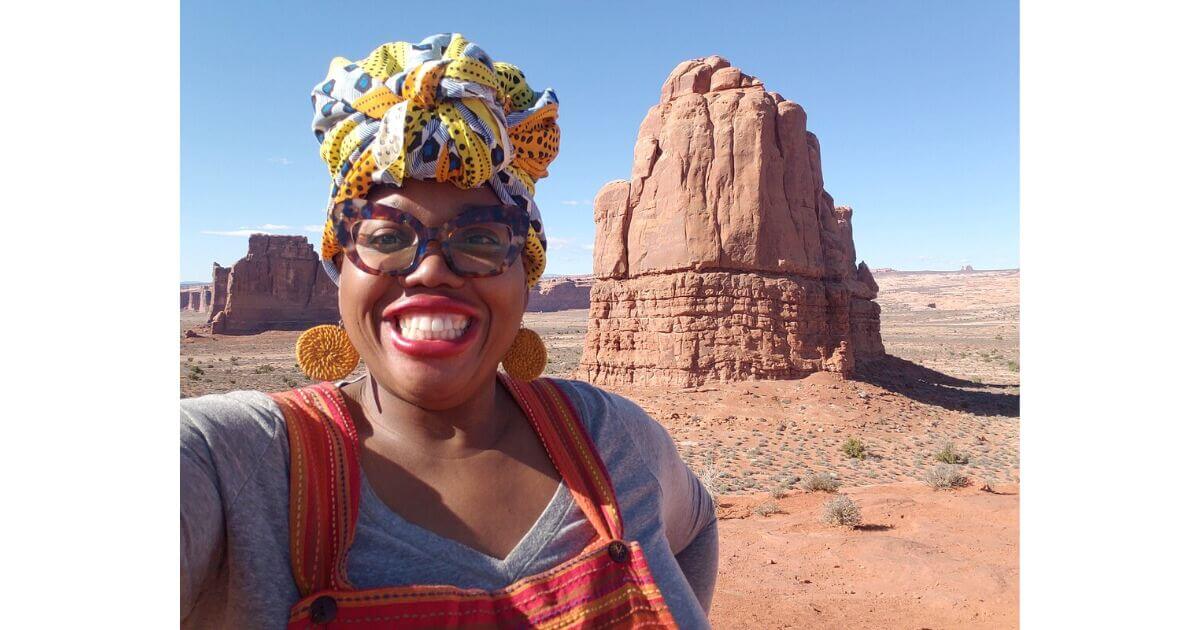
To honor Black History Month, we sat down with Kween Werk, a Black, non-binary environmental activist and educator. Kween Werk uses social media to advocate for a more inclusive society. Right now, their message feels more poignant than ever. We hope it inspires you as much as it inspires us. This particular quote feels important to keep in mind:
"Our joy transcends oppression. We dance even when the world is burning."
Tell us about your identities and your coming out:
I got my Bachelor’s Degree in Anthropology, and once I saw around the world that different cultures celebrated queerness and gender diversity, I realized I could be expansive and I didn’t have to be in a box. Now I've embraced my identities of being non-binary, being femme, being pansexual, being polyamorous. That's the beauty of queernes; is that it's expansive, and I've been able to express myself in ways that feel authentic to me.
How do you feel like your intersecting identities of being Black and Queer inform your experience in the world?
I’m Black, I’m queer, I’m non-binary. People first see my Blackness before they see anything else. When I’m in white, queer spaces, I’m often thanked for being an ally because people don’t see that this is my community, too.
In these different spaces, I’m navigating the intersections of my identities and I think it’s important for people to understand that the intersecting identities means my experience is often different than that of others.
But it’s really important to acknowledge those differences and use them to create spaces that include and celebrate everyone.
Talk to us about using social media to talk about social and environmental justice:
I sort of fell into social media by accident. I’m a Gen X-er, so social media wasn’t a part of my life until somewhat recently. Right when COVID-19 hit, my 23-year-old niece came to spend two months with me and she was doing TikTok dances all day and she convinced me to join.
I started out just doing silly dances in my backyard with my kids, but then I realized I could use it as a vessel to talk about things that were important to me and might resonate with other people. I talked about intersectionality and inclusion in the outdoors. I’m a fat, Black hiker and I love being outdoors. And you don’t often see representation of people like me outdoors, so I think sharing that on social media really helped other people see themselves in these spaces that they aren’t traditionally in.
From there, I’ve been able to use my social media to talk about LGBTQ+ rights, rights for people of color, and be the example that I wish I would have had.
What’s your Call to Action to the community?
I think it’s really important for all of us to connect with people who are different from us. I often walk into spaces where I’m the only person of color or the only queer person. That can feel really alienating and it can also bring a lot of pressure and a feeling of being tokenized, and it’s forced me to constantly learn to code switch.
For folks wanting to better understand other communities, one of the best ways to do so is to spend time with those communities, but also to put yourself into the experience of being the only one with your identity in the room.
True allyship requires action. And, it requires standing up for the people in your community. It’s so important to think about what you’re actually doing to support queer people, people with disabilities, and people of color. And you can support with time, with money, with other resources. There are so many ways to show up and be an ally, but true allyship requires action.
The goal we should all be working towards is being an accomplice, which is a step above an ally. An accomplice realizes that all of our liberations are tied together, so we all need to show up and fight for one another. White supremacy, patriarchy, homophobia, and transphobia put all of us in boxes that don’t serve us.
What does Black, Queer joy look like to you?
I see Black, Queer joy as a direct pushback against the systems that make us small and that try to keep us down. Our joy transcends oppression. We dance even when the world is burning. We dance, we laugh, and we support each other in community. We have drag shows, and balls, and Pride, and all of these moments of joy that we use to connect with each other and lift each other up.
That joy is resistance against the narrative that we don’t belong, that we’re less than, that we’re abominations. That joy allows us to maintain who we are even in the storm and to support each other even in the storm.