
The Last Round
Denver's lesbian bars are nearly gone. A stained glass window — and the women who loved what it stood for — refuse to let the story end there.
There are 36 lesbian bars left in the United States.
Mary Romano was eighteen when she first walked into The Three Sisters, and her parents had made clear they wanted nothing to do with who she was becoming. A lesbian. Back then, a dirty word.
So she found another family — in a North Denver pub just off of I25 with peeling paint, sticky floors, and a bouncer named Buffy who, as Mary tells it, was "the most butchest butch you'd ever seen," and who treated the door like a kingdom to be guarded against.
"She was here to protect the bar," Mary, now 68, says, “And she protected it at all costs.”
That meant keeping out underage drinkers who might attract police and men who made the patrons uncomfortable. It sometimes meant barring the police themselves, who occasionally arrived without warrants and were barred from entry because of it.
The Three Sisters was that kind of place: scrappy, imperfect, and irreplaceable. An English-style pub that functioned, for many of its regulars, as the only room in their lives where they didn't have to perform a version of themselves they didn't recognize. Holidays were spent there. Patrons held potlucks and celebrated each other with the particular ferocity of people who had built their own definitions of family from scratch.
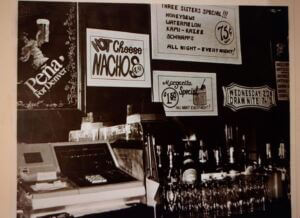
The Three Sisters, one of Denver's oldest lesbian bars, has been closed for decades now. The Center is rededicting a piece of its art.
"Most lesbians were living in survival mode at the time"
"Most lesbians were living in survival mode at the time," Mary says. "A glitzy cocktail bar was so out of the question. And a dive felt true to who we were."
The bar closed in 1996, after one of its two owners was diagnosed with Alzheimer's disease. Before it disappeared entirely, community members salvaged a stained glass art piece from the interior — a small act of archival resistance. That piece has lived quietly ever since, waiting.
On March 30, The Center on Colfax will rededicate it at its building at 1301 E. Colfax Ave., followed by an afterparty at The Pearl, which now holds the distinction of being Denver's only remaining lesbian bar.
Living History
There are thirty-six lesbian bars left in the country.
Mary is careful about the way she tells this story, wary of the tendency to sand down the difficult edges. Outside The Three Sisters, tires were slashed. Women were mugged. The threats were sometimes random, sometimes legibly homophobic, and the distinction, Mary notes, didn't much matter at the time.
The bar's roughness was woven into its appeal.
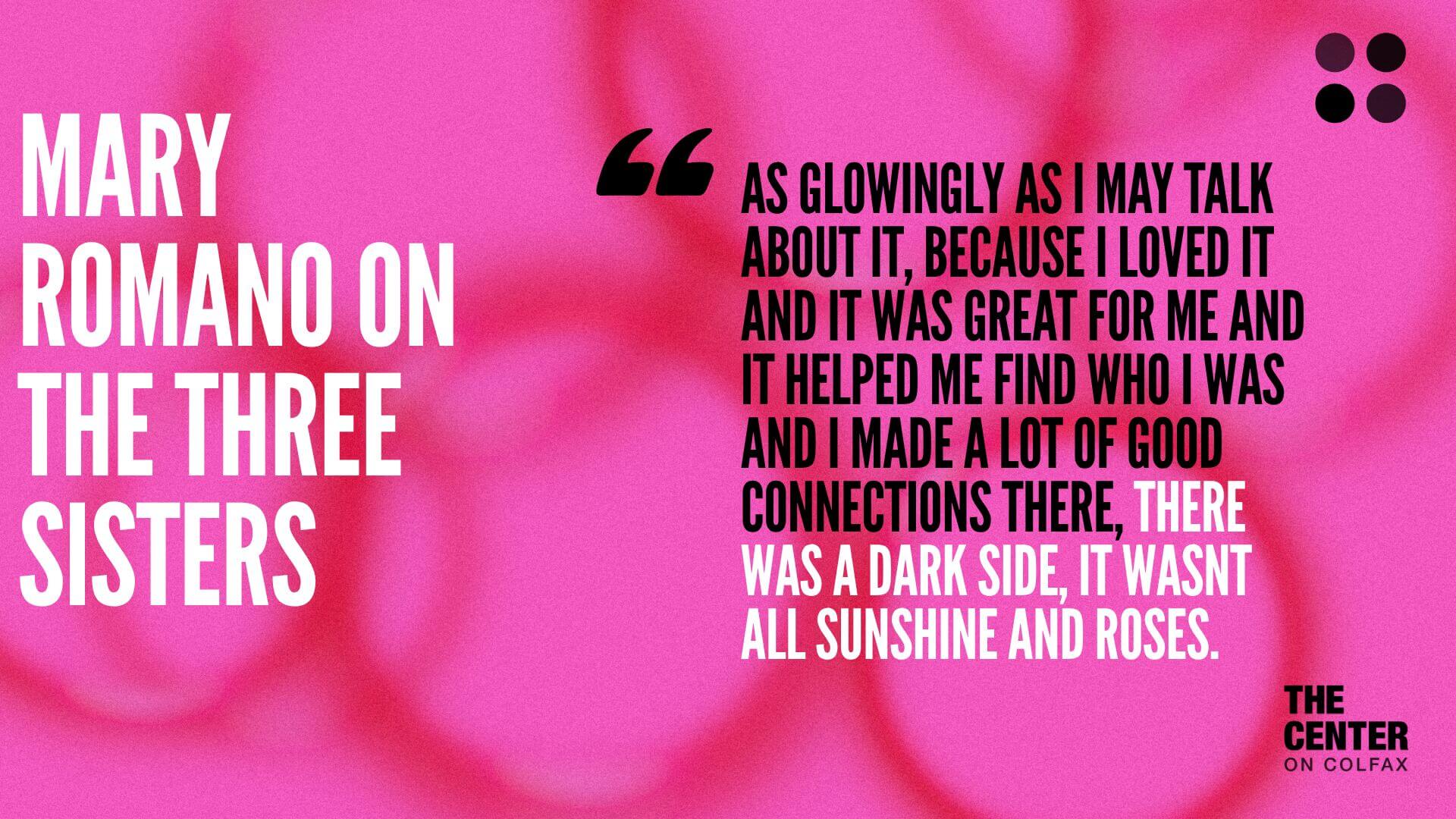
"We have a tendency to want to talk about our spaces as glowingly as possible," she says. "I loved it. It helped me find who I was. But there was a dark side. It wasn't all sunshine and roses."
She also wants younger generations to understand the linguistic texture of that world — how identity was named, and how it wasn't. "Back then, we didn't have all of the terminology we have today," Mary says. "Everyone identified as a woman, and most were in the butch or femme categories — but some of them probably would identify as trans or non-binary today." The categories were incomplete. The community was not.
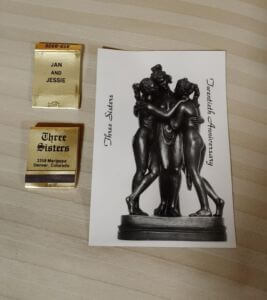
Jan Gibbins and Jessie McDonald, a married couple and the owners of the Three Sisters, one of Colorado's first lesbian bars. Photo provided by Mary Romano.
Lessons Worth Preserving
Kelly Pearce was born in 1997, the year after The Three Sisters closed. She is twenty-eight, queer, and a member of The Center on Colfax's Archiving Committee, which is helping organize the rededication. She thinks about generational inheritance the way historians do — as something that requires active tending.
"We have the privilege of people who came of age in the seventies and eighties still being here to share their stories," Pearce says. "That window isn't going to be open forever."
The timing of the rededication is not incidental. Colorado has been contending with a pair of ballot measures targeting transgender rights — a reminder that the legal landscape for queer people has never moved in only one direction. Same-sex marriage once seemed like fantasy. Gender-affirming care, now legally protected in some states, is under challenge in others.
Denver's sapphic geography has shifted accordingly. Blush & Blu, which opened in 2012, closed in 2024 amid lawsuits alleging racism and unpaid wages. The Pearl — originally Pearl Divers — took over the former Mercury Cafe in 2025, making it the state’s only currently operating lesbian bar.
The Center on Colfax has long understood that queer survival requires intergenerational work. Through our Colorado LGBTQ History Project and our West of 50 program — which includes Writing Your Story, an initiative for LGBTQ people over fifty — we work to ensure that the history being made is also the history being kept.
The stained glass piece from The Three Sisters has waited thirty years for this.
"Be tough, be proud, and don't ever let anyone tell you you can't be exactly who you are,"
Through the Supreme Court federally recognizing same-sex marriages, Colorado passing legislation protecting our community, and progress feeling like a constant pendulum swing.
Mary's message, when asked what she wants younger generations to take from all of it, is direct: "Be tough, be proud, and don't ever let anyone tell you you can't be exactly who you are."
Some things, it turns out, don't need translation across generations. They just need to be remembered and cherished with each generation that passes.
The rededication of The Three Sisters' stained glass art piece takes place March 30 at 5:30 p.m. at The Center on Colfax, 1301 E. Colfax Ave. An afterparty follows at The Pearl.